Why It Matters
Shadow AI is not a hypothetical risk. It is already happening in most organizations. Employees who discover that AI tools make them faster and more effective will use them whether or not official policy exists. The problem is not the AI use itself. It is the lack of visibility and governance around it. When AI adoption happens in the shadows, organizations cannot manage data exposure, ensure output quality, maintain compliance, or learn from what is working.
How It Emerges
Shadow AI follows a predictable pattern. An employee tries an AI tool for a personal task and finds it useful. They start using it for work tasks. They share it with colleagues. Soon, multiple people across the organization are using various AI tools with different capabilities, different data handling policies, and different levels of reliability. Nobody has evaluated the security implications, nobody is tracking what data is being shared, and nobody knows which business outputs were AI-assisted.
The Risk Landscape
- Data exposure: employees paste confidential information into AI tools that store and may train on that data
- Quality inconsistency: different AI tools produce different quality levels, and nobody is verifying outputs
- Compliance gaps: regulated industries face liability when AI is used in decision-making without documentation
- Security vulnerabilities: unapproved AI plugins and integrations create new attack surfaces
- Knowledge fragmentation: AI-assisted processes that only one person understands become single points of failure
From Shadow AI to Governed AI
The solution to shadow AI is not prohibition. Banning AI tools drives usage further underground. The solution is creating governance that is clear, accessible, and enabling. This means approving tools that meet security standards, defining data classification rules, establishing verification norms, and making it easier to use AI within guidelines than outside them.
Signs Your Organization Has a Shadow AI Problem
You likely have shadow AI if there is no official AI use policy, if employees say they "do not use AI" despite obvious productivity gains, if different teams are using different tools with no coordination, if nobody can answer what data has been shared with external AI services, or if AI-generated content is being published or shared with clients without disclosure or review.
Related Concepts
AI Guardrails
AI guardrails are the policies, technical controls, and behavioral norms that define the boundaries of acceptable AI use within an organization. They cover what AI can be used for, what data can be shared with AI tools, what outputs require human review, and what use cases are prohibited.
AI Fluency at Work
AI fluency at work is the ability to effectively collaborate with AI tools in professional contexts, including knowing when to use AI, how to verify its output, and how to integrate it into team workflows with appropriate governance.
Digital Dexterity
Digital dexterity is the ambition and ability of employees to use existing and emerging technology for better business outcomes. It goes beyond digital literacy (knowing how to use tools) to include the willingness and adaptability to adopt new technologies as they appear.
Further Reading

From Shadow AI to Shared Norms: How Teams Manage Risk Without Slowing Down
Shadow AI is not a technology problem. It is a governance gap. This post maps the risk surface of unstructured AI adopti
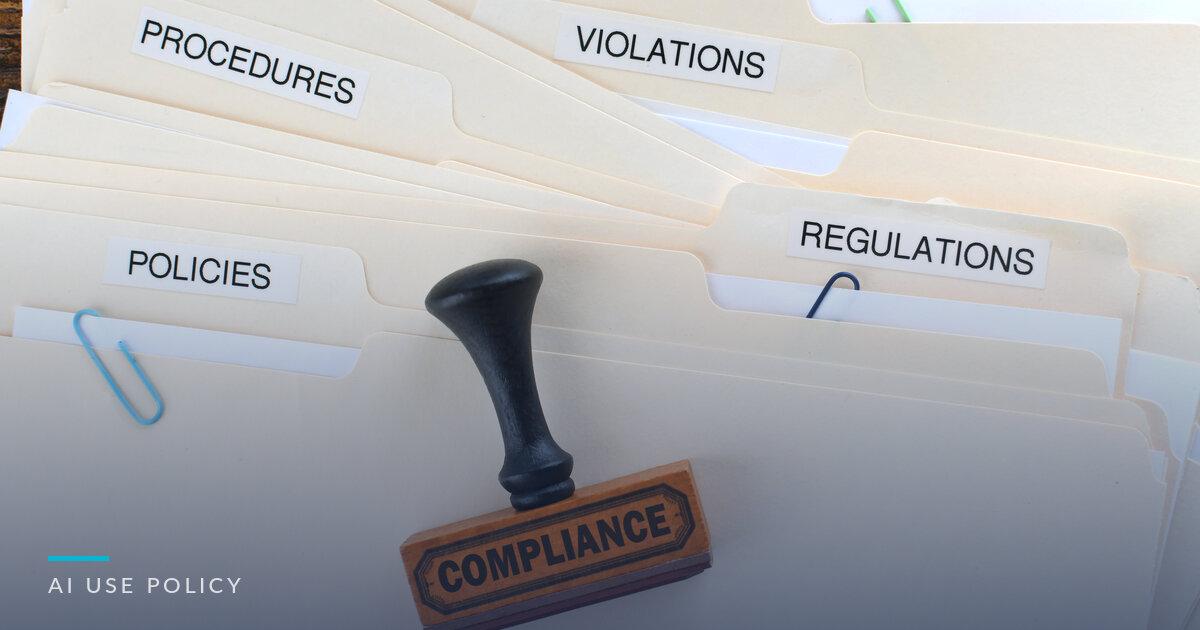
Building an AI Use Policy Your Team Will Actually Follow
Most AI policies fail because they read like legal documents. A policy your team follows is short, specific, and built a
Compliance Risk in Distributed Teams Using AI: What Leaders Miss
Distributed teams using AI tools create compliance risks that traditional oversight models miss. Leaders need a risk fra