Building an AI Use Policy Your Team Will Actually Follow

Kinetiq Team
The Policy That Nobody Reads
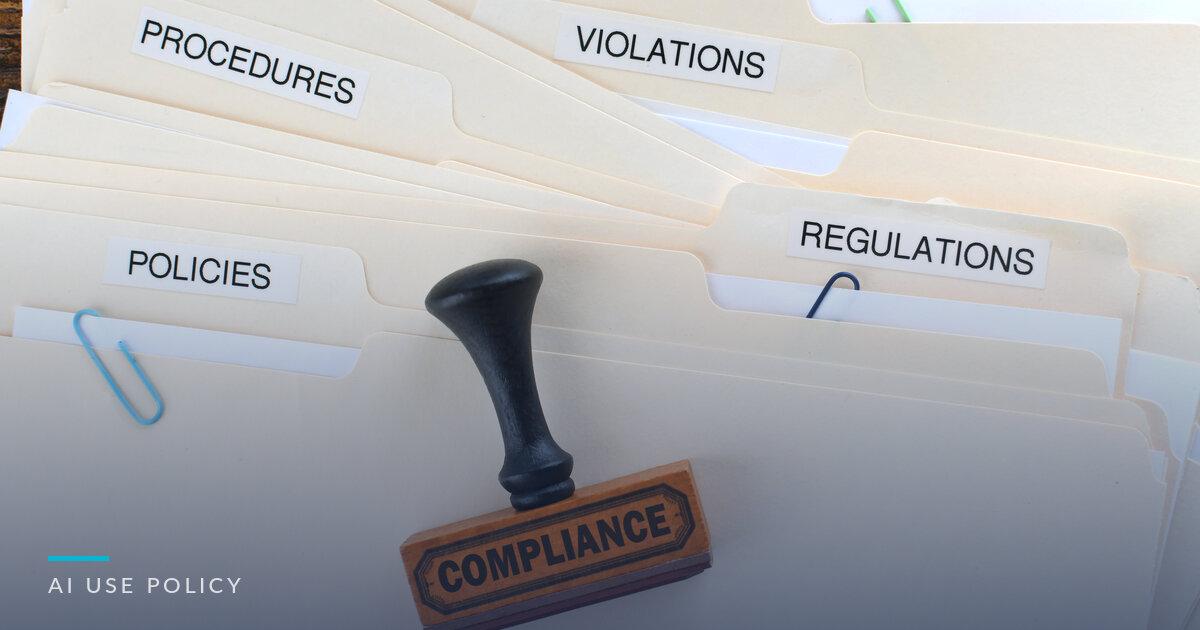
Somewhere in your company’s shared drive, there is an AI use policy. It was written by legal, reviewed by compliance, and distributed via an all-hands email that most people skimmed on their phones. It is thorough. It covers edge cases. And almost nobody on your team can tell you what it says.
This is the norm, not the exception. Organizations invest weeks drafting AI governance documents that read like terms of service agreements. The documents are technically sound and operationally useless. People do not ignore them out of malice. They ignore them because a 12-page document with nested sub-clauses does not translate into “what do I do when I am about to paste client data into a language model at 4:30 on a Thursday?”
The gap between policy and practice is where risk lives. Closing it requires a different kind of document: one that is short enough to remember, specific enough to apply, and built with the people who will use it.
Three Failure Modes of AI Policies
Before building something better, it helps to understand why most AI policies fail.
1. Too Broad
“Use AI responsibly and in accordance with company values.” This sounds reasonable in a slide deck but provides zero decision support in the moment. When every interpretation is valid, no interpretation is useful. Broad policies create the illusion of governance while leaving every judgment call to the individual.
2. Too Restrictive
“AI tools may only be used with written approval from your department head for each use case.” This kills adoption, pushes usage underground, and ensures that the people experimenting with AI (often your most resourceful team members) stop telling anyone about it. You do not reduce risk by restricting visibility. You increase it.
3. Too Vague on Boundaries
Some policies land between broad and restrictive but fail on specifics. They say “do not share sensitive data” without defining what counts as sensitive in your context. They say “verify AI outputs” without specifying what verification looks like for a marketing draft versus a financial projection. Vague boundaries produce inconsistent behavior, which is the thing governance is supposed to prevent.
Risk Map: Boundaries vs. Guidelines
Not every AI use case carries the same weight. Effective policies distinguish between hard boundaries and flexible guidelines. Treating everything as equally risky produces the over-restrictive policies that teams abandon. Treating nothing as risky produces the broad ones that offer no protection.
Hard boundaries apply where the consequences of error are severe or irreversible: client data handling, regulatory filings, legally binding language, public statements on sensitive topics. These are non-negotiable rules, not suggestions.
Flexible guidelines apply where the work is lower stakes and the team needs room to experiment: internal brainstorming, personal productivity, early-stage drafts, research synthesis. Here, the policy sets expectations (verify before sharing, label AI-assisted work) without requiring approval workflows.
The line between boundaries and guidelines will differ for every team. A data analytics team handling protected health information needs hard boundaries that a content marketing team does not. This is why the team itself needs to be in the room when the policy is written.
The Four-Section Policy Structure
Every actionable AI policy answers four questions. If yours does not address all four, people will fill the gaps with their own assumptions.
Section 1: Allowed (Green Zone)
What can team members do without asking permission? Be explicit. Examples: using approved tools for brainstorming, drafting internal documents, summarizing meeting notes, generating code for internal prototyping. The green zone should feel generous enough that people do not feel surveilled during routine work.
Section 2: Requires Review (Yellow Zone)
What requires a second set of eyes before the output leaves the team? Examples: client-facing content, data analysis that informs decisions, any deliverable where an error creates reputational or operational cost. Specify who reviews and what they check for.
Section 3: Not Allowed (Red Zone)
What is off-limits, full stop? Examples: inputting proprietary client data into unapproved tools, using AI-generated content in regulatory filings without expert validation, presenting AI output as original human analysis without disclosure. Keep this list short and absolute. If the red zone has 30 items, people will not remember any of them.
Section 4: Escalation Path
What happens when someone is unsure? This is the section most policies skip, and the one that matters most in practice. Name a person or role. Describe the expected response time. Make it clear that asking is encouraged, not penalized. If the escalation path feels bureaucratic, people will skip it and guess.
Build It With Your Team, Not For Your Team
The single biggest predictor of whether a policy gets followed is whether the people it governs helped write it. This is not a morale exercise. It is a design principle. Your team members know which tasks they use AI for, where they feel uncertain, and which guidelines feel like obstacles designed by people who do not do their job. That knowledge is essential input.
Run a 45-minute session. Start by having each person list (anonymously, if needed) the AI tools they use and the tasks they apply them to. Then classify each use case into green, yellow, or red together. Disagreements are productive here. If two people classify the same task differently, that tells you the boundary is unclear and needs explicit language.
Separate wins from controls. Present the policy as a document that protects what is working, not just one that restricts what is risky. For every control, name the corresponding win. “We label AI-assisted work (control) so we can build a library of effective prompts and workflows the whole team benefits from (win).” When people see the policy as protecting their ability to use AI effectively, compliance becomes self-interest.
Verification as a Norm, Not a Bottleneck
Teams resist verification because it sounds like extra work layered onto an already full schedule. The reframe is simple: verification is not a tax on speed; it is what makes speed sustainable.
Match verification depth to stakes. Green zone tasks need a self-check that takes two minutes. Yellow zone tasks need a peer review that takes ten. Red zone tasks need expert validation. This tiered approach, similar to how Kinetiq’s AI collaboration module structures human and machine workflows, prevents verification from becoming a bottleneck while ensuring high-stakes outputs get the scrutiny they require.
The key behavioral shift is assigning the verification tier before the work begins, not after. When the tier is set at kickoff, it is a workflow step. When it is retrofitted after delivery, it is an interruption.
One-Page AI Use Policy Template
Use this template in a team session. Fill it out together. Print the result and keep it visible. Revisit it every 30 days.
ONE-PAGE AI USE POLICY
Team: _______________
Effective date: _______________
Next review: _______________ (30 days)

GREEN ZONE (No approval needed)
  Approved tools: _______________
  Allowed uses:
    - _______________
    - _______________
    - _______________
  Verification: Self-check before sharing internally

YELLOW ZONE (Peer review required)
  Applies to:
    - _______________
    - _______________
    - _______________
  Reviewer: _______________ (name or role)
  Review checks: Factual accuracy, source attribution, tone
  Label: "AI-assisted, reviewed by [name]"

RED ZONE (Not allowed or expert-only)
  Hard boundaries:
    - No [data type] in [unapproved tools]
    - No AI-generated [content type] without [expert role] sign-off
    - _______________
  Expert validator: _______________ (name or role)

ESCALATION PATH
  Unsure about a tool or use case? Contact: _______________
  Expected response time: _______________
  Rule: Asking is always better than guessing.

WINS THIS POLICY PROTECTS
  - _______________
  - _______________
  - _______________

MONTHLY REVIEW QUESTIONS
  1. Any new tools or use cases to classify?
  2. Any boundaries that feel too tight or too loose?
  3. Any incidents or near-misses to learn from?
  4. What is working well that we should formalize?
Start With the Session, Not the Document
Do not write the policy in isolation and distribute it. Schedule 45 minutes with your team this week. Surface what people are already doing, classify use cases together, and write the one-page version in that room.
A policy your team helped build is a policy your team will reference when it matters. That is the only kind worth having.
If your team is navigating AI adoption and looking for structure around verification, collaboration norms, and responsible use, Kinetiq’s AI module provides frameworks designed for exactly this transition.

Written by
Kinetiq Team
The KinetIQ editorial team. We write about the systems behind how work actually gets done: communication, decision-making, accountability, handoffs, and the execution habits that hold up when teams are under pressure.