The Data Behind Why Work Broke
And how to fix it.
Remote work, meeting overload, turnover spikes, and AI disruption aren't separate problems. They're symptoms of the same coordination failure. Here's what the research shows, and what to do about it.
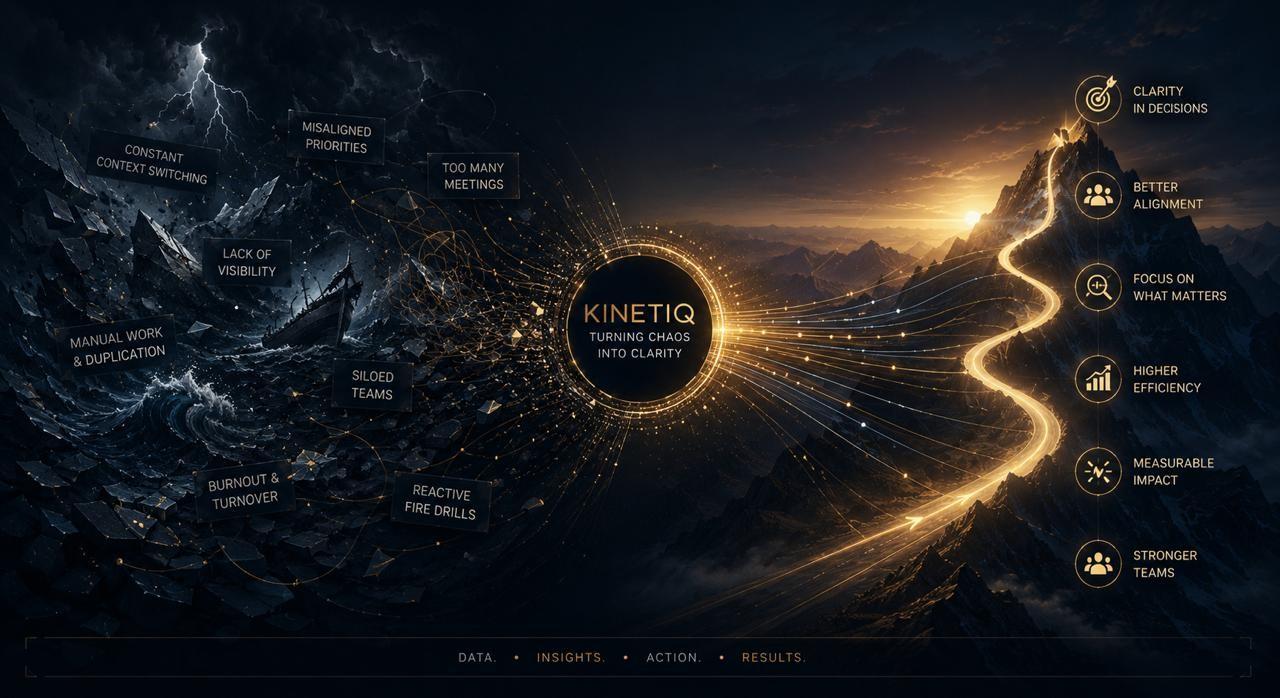
What Changed
Work transformed after 2020. Management systems didn't keep up.
Work is distributed
Among jobs that can be done remotely, 78% of U.S. employees now work at least partly remote. The office-first model is over. Coordination now crosses locations, time zones, and tools.
Coordination load exploded
Weekly meeting time has surged 252% since February 2020. Teams aren't meeting more because they want to. They're meeting more because distributed work demands constant alignment.
The workday leaked into nights
After-hours work is up 28%, weekend work up 14%, and meetings after 8 PM up 16%. The boundaries that used to protect recovery time have dissolved.
Skills are shifting faster than roles
44% of workers' core skills will be disrupted by 2028. 40% of the workforce needs reskilling within 3 years. Yet only 39% have received any AI training from their employer.
Work is distributed
Among jobs that can be done remotely, 78% of U.S. employees now work at least partly remote. The office-first model is over. Coordination now crosses locations, time zones, and tools.
Coordination load exploded
Weekly meeting time has surged 252% since February 2020. Teams aren't meeting more because they want to. They're meeting more because distributed work demands constant alignment.
Weekly meeting time increase since Feb 2020
The workday leaked into nights
After-hours work is up 28%, weekend work up 14%, and meetings after 8 PM up 16%. The boundaries that used to protect recovery time have dissolved.
Skills are shifting faster than roles
44% of workers' core skills will be disrupted by 2028. 40% of the workforce needs reskilling within 3 years. Yet only 39% have received any AI training from their employer.
The Cost of Friction
Coordination failure isn't abstract. It has measurable financial and operational costs.
- $1,685 per employee per year in direct absenteeism costs
- Unplanned absences destroy ~37% of a day's output
- 47% of overtime hours cover absent colleagues
What KinetIQ Installs
Not content. Not inspiration. An operating system of repeatable habits, manager scripts, and coordination norms.
KinetIQ Foundations
Foundations for cross-functional work
What your team gets
Practical tools
Templates, scripts, and frameworks you use the same week you learn them
Real-work application
Every lesson ends with a task using your actual team context
Built-in accountability
Self-ratings, peer feedback loops, and manager check-ins
How Rollout Works
Designed for real constraints. No disruption. No guesswork.
Pilot
2–4 weeks
Install
4–6 weeks
Reinforce
Ongoing
Measure the friction
Pilot · 2–4 weeksRun a baseline assessment with one team to identify coordination hotspots and quantify the drag.
- Baseline measurement of meeting load
- Friction hotspot identification
- Team readiness assessment
- Success metrics defined
Deploy the operating system
Install · 4–6 weeksWeekly modules, working sessions, and manager scripts that install new habits, not just knowledge.
- Weekly module delivery
- Working sessions (not lectures)
- Manager script practice
- Progress checkpoints
Make it stick
Reinforce · OngoingScheduled checkpoints, reusable templates, and manager accountability tools that prevent drift.
- Monthly reinforcement checkpoints
- Reusable templates and playbooks
- Manager consistency scripts
- Quarterly impact review
Calculate Your Friction Cost
See what coordination drag is costing your organization, and what recovery looks like.
Your Numbers
Annual Friction Cost
$3.1M
Estimated Annual Recovery
$468K
Hours Recovered Per Year
10,572

Ready to Reduce the Drag?
The data is clear. Coordination friction is costing your organization time, talent, and money. Let's talk about what KinetIQ can do for your team.
Common Questions
Have questions about fit, rollout, or outcomes? These FAQs explain how KinetIQ supports distributed teams, what to expect in a pilot, and how we measure impact.